

Why the South African Sardine Run Is Addictive
What actually makes someone head out to sea in search of the dream baitball, travel from around the world to the remote Eastern Cape Wild Coast, throw themselves into a rough ocean with no guarantees of a result — and then come back and do it all again?
This is coming from possibly the most addicted person on the planet: me. After years of doing this, I think I have a clue.
The Sardine Run Is a Real-Life Mystery Box
It is driven by three powerful things: scarcity, uncertainty and reward. Add to that a worldwide community of photographers, filmmakers, freedivers and ocean adventurers who are equally obsessed with the event, and you have something incredibly compelling.
I don't say this as someone who has visited the Sardine Run a few times. I am a zoologist and have spent 18 years running Sardine Run expeditions with my company, Animal Ocean, working as a field guide both above and below the surface and skippering boats in search of the action. I have spent thousands of hours looking at the ocean, following dolphins, reading birds, searching for baitballs and then getting into the water to observe what is actually happening beneath the surface. After all that time, the Sardine Run hasn't become more predictable to me. If anything, I have become more aware of just how unpredictable it really is.
Why Do We Keep Chasing It?
Most of us who live for the ocean are chasing wilderness and natural behaviour. We want to get close to wild animals and witness something real. It becomes part of our identity. We train for it. We buy equipment for it. We spend ridiculous amounts of time talking about it. Our friends are often people who share the same obsession. And at the pinnacle of wild things you can do sits the Sardine Run.
Even getting there requires commitment. You need the time, the money, the equipment and a booking. You travel to a remote part of the Wild Coast and give yourself six days, perhaps two weeks, knowing there is absolutely no guarantee of what you are going to see. That uncertainty is important. It keeps me engaged.
Every Morning Starts With the Unknown
Every morning you launch into the ocean wondering: What is out there today? Each day is different from the last.
A huge baitball? Hundreds of sharks? Thousands of dolphins? Diving gannets? Whales? A completely unexpected interaction that nobody on the boat has ever seen before? All of it is possible.
The potential reward is enormous — bigger than you can imagine — but it is never guaranteed. The weather can be brutal. The ocean changes constantly. The animals move. You have to search, interpret clues and make decisions. Where you position yourself matters. How quickly you react matters. Eventually, the boat becomes a team. Everyone starts watching the horizon, reading the birds and trying to figure out the puzzle together.
And Then the Box Opens
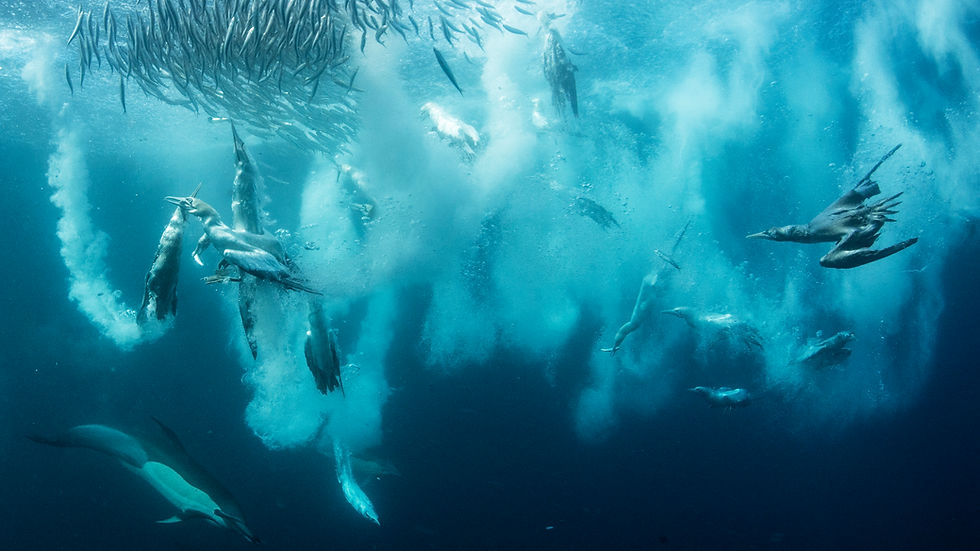
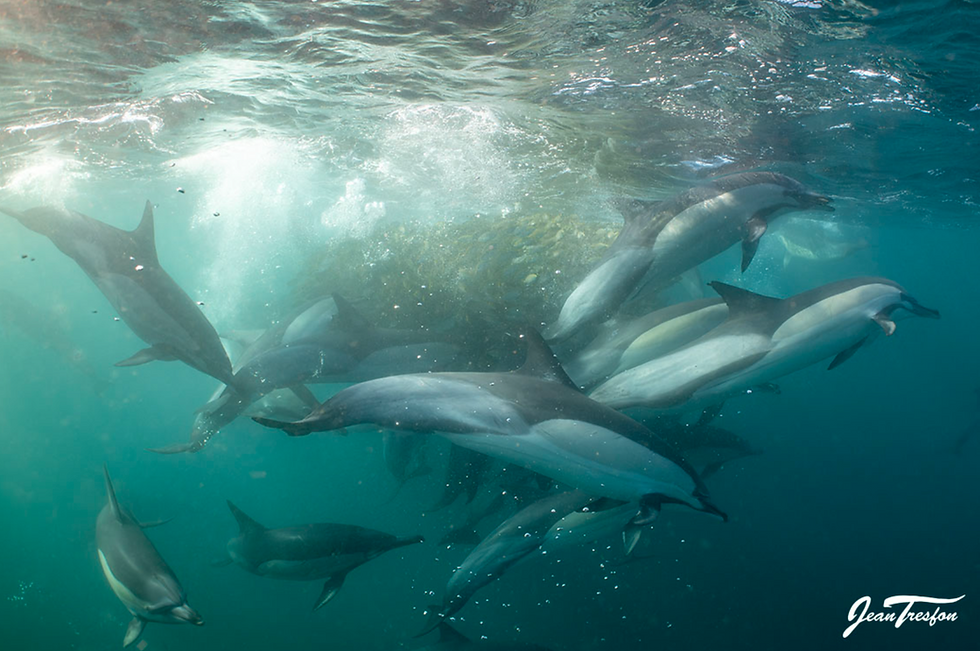
Occasionally, the mystery box opens. Suddenly you are inside one of those scenes you have watched on BBC, Netflix or National Geographic: dolphins driving sardines, sharks cutting through the bait, gannets raining from the sky and whales appearing through the chaos. For a few minutes, you are not watching the documentary. You are in it.
You photograph it, talk about it, share it with your friends and replay it endlessly in your head. But you also know there were other boats that saw something completely different. Someone had an encounter you missed. Someone photographed something you have never seen. And immediately, the mystery box closes again.
You Can Never Complete the Sardine Run
That, I think, is the obsessive relationship we have with the Sardine Run. After 18 years of watching it as a zoologist, skipper and underwater field guide, I still don't feel as though I have completed it. I don't think you can.
It is never the same. It is never easy. You never see everything. There is always another behaviour, another combination of predators, another extraordinary day happening somewhere else along the coast.
And just when you think you understand the Sardine Run, it shows you something completely new.
So we all keep coming back. Writer credentials : Steve Benjamin is a zoologist, underwater cameraman and founder of Animal Ocean. He has worked on the South African Sardine Run for 18 seasons since 2008 as well as filmed or assisted with wildife projects for BBC, Nat Geo, NHK, Netflix and is a Nauticam ambassador


2048 encourages players to examine the entire grid before giving up. A board packed with tiles may look finished, but one available combination can change everything and provide enough movement to continue building toward a higher score.
Spent a couple hours on Pokiig last week going through the puzzle section. A few of the games were more engaging than I expected — kept telling myself one more level and then lost track of time.
hi